Our feet carry the whole weight of the body thousands of times a day and yet they are the part we look at least. With children, the usual question is whether those seemingly flat feet will cause trouble later on; with adults, whether insoles are worth it. Here is what a podiatrist does and when it makes sense to book an appointment.
Flat feet in children: what is normal
Almost all babies and toddlers appear to have flat feet, because of the fat pad on the sole and because the arch takes years to form. The arch develops up to the age of 5 or 6, and often up to 8 or 9. A flat foot at 3 years old that is flexible and painless is usually a stage, not a disease.
What matters is whether the flat foot is flexible or rigid. If an arch appears when the child stands on tiptoe, the foot is flexible: this is the great majority of cases and the outlook is good. If the arch never appears, if the foot is rigid, or if it hurts, it needs looking into.
Walking with the toes turned in or out and knock knees are also common and usually resolve as the child grows.
When to seek advice
It is worth seeing a podiatrist if your child:
- Complains of pain in the feet, ankles, knees or legs, or asks to be carried very early on short walks.
- Tires far more than other children of the same age when playing or walking.
- Walks on tiptoe persistently beyond the age of 2 or 3.
- Has one foot clearly different from the other.
- Has a rigid flat foot that forms no arch on tiptoe.
Pain is never normal in a child's foot; if it is there, it should be assessed. A flexible, painless flat foot with a normal walking pattern, on the other hand, often needs no more than follow-up and sensible advice about footwear and activity. Our article on child health checks by age sets out when walking and gait are reviewed.
What a gait study involves
This is the assessment that shows how your foot distributes weight and how it behaves in movement. It includes:
- Clinical examination: joint mobility, heel alignment, muscle strength and an assessment of the whole chain (foot, knee, hip, back).
- Gait analysis, often with a pressure plate and video, to see load distribution and the phases of each step.
- A look at your shoes, which tells us a great deal: the wear pattern is a map of how you walk.
It takes no more than thirty or forty minutes and is painless. Come in comfortable clothing and bring the shoes you wear day to day.
Custom insoles: who needs them, and for how long
Insoles, or orthotics, are not for everyone and do not "correct" a foot on their own. They redistribute pressure, cushion and improve alignment, and they make sense when there is pain or a problem that justifies them: plantar fasciitis, forefoot pain, heel spurs, a symptomatic high or flat arch, leg length differences, or overload in runners.
In children they are prescribed only where there is pain, significant fatigue or a structural problem, and always alongside exercise: feet get stronger through play and walking barefoot on safe surfaces.
They are made from a cast or a scan of the foot, reviewed a few months later for adjustment and, in children, remade as they grow. When the underlying problem is a sports injury, the best results come from combining them with physiotherapy; we cover this in our article on sports injuries.
Routine foot care: ingrown toenails, hard skin and corns
Much of adult podiatry involves small problems that make daily life uncomfortable:
- Ingrown toenail: the nail digs into the skin and inflames it, usually after cutting it too short or rounded, from tight shoes or a knock. It is treated on the spot and, if it recurs, a small nail procedure under local anaesthetic stops it coming back.
- Hard skin and corns: the skin's response to repeated pressure. They are removed painlessly, but they return unless the cause — footwear or the way you walk — is addressed.
- Fungal nails and verrucas: common from pools and changing rooms, and needing specific treatment and patience.
Cutting nails straight across, drying carefully between the toes and giving up tight shoes prevents a good share of these appointments.
Diabetic foot care: the check that prevents problems
If you have diabetes, regular podiatry is not cosmetic; it is front-line prevention. Diabetes can reduce sensation and circulation in the feet, so a small wound may go unnoticed and become complicated. The podiatrist tests sensation with a monofilament, checks the pulses, treats nails and hard skin with sterile instruments, and shows you how to care for your feet at home.
The basic routine: look at your feet every day, including the soles and between the toes; never walk barefoot; and seek advice straight away about any wound, change of colour or warm area.
Frequently asked questions
At what age should a child first see a podiatrist?
If nothing is causing concern, at around 4 or 5, once the walking pattern has matured. Earlier if there is pain, persistent toe walking, one foot different from the other, or if parents are worried.
Do insoles cure flat feet?
They do not cure them: they improve pressure distribution and comfort where there are symptoms. For a flexible, painless flat foot, the evidence does not support prescribing them routinely; exercise and good footwear are usually enough.
Is podiatry covered by health insurance?
It varies considerably between policies: some companies cover the consultation, others only part of the treatments. Check our health insurance page and we will confirm your particular case when you book.
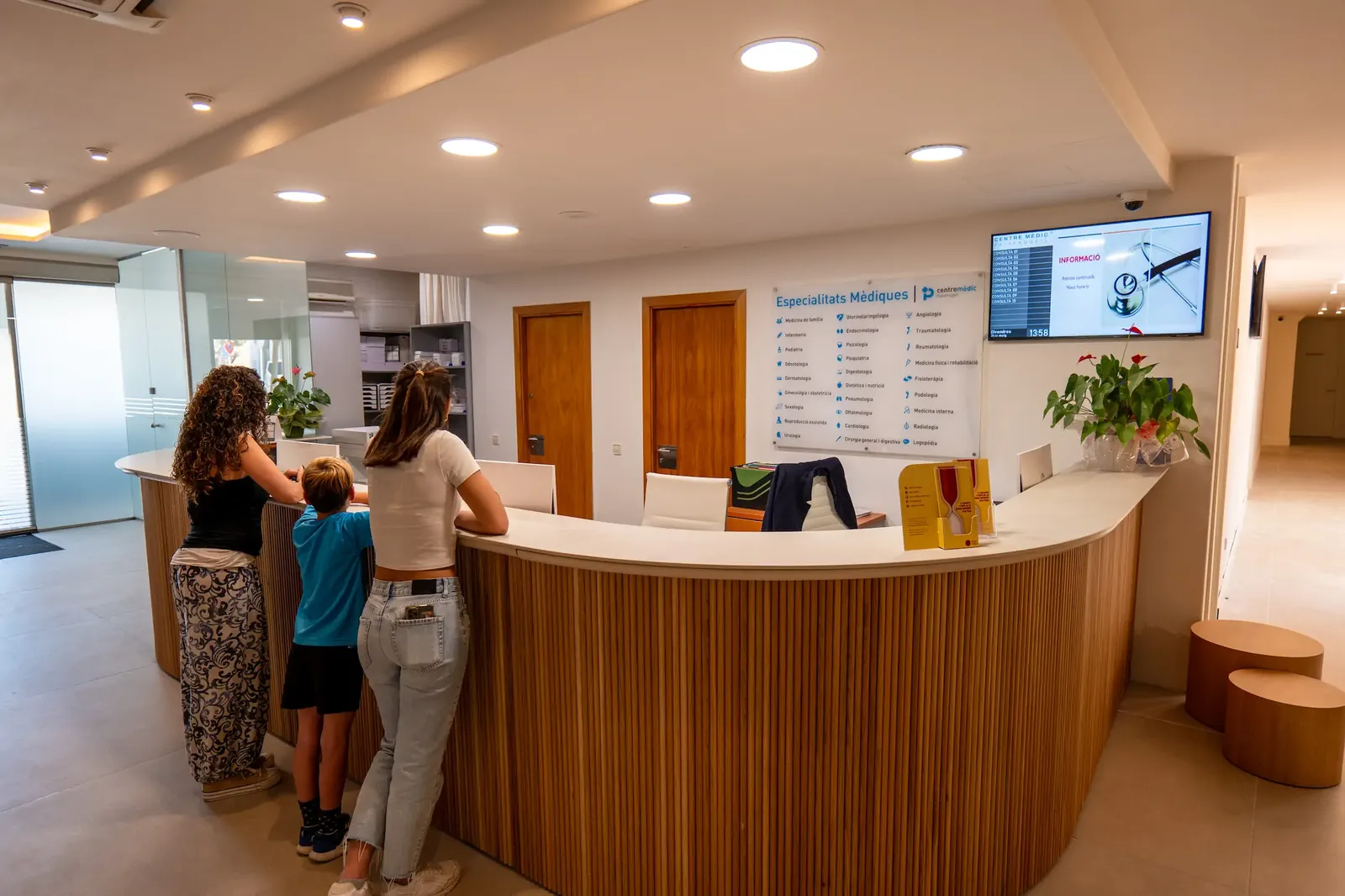
We provide podiatry for children and adults at Centre Mèdic Palafrugell, Plaça de Catalunya, 5. Call us on 972 30 65 65 or write through the contact form; we are open Monday to Friday from 8 am to 8 pm and Saturday from 9 am to 2 pm.