Good eyesight is something most of us only think about once it starts to fail. Most eye conditions cause no pain and give no warning: they develop slowly and the brain compensates for them until a fair amount of sight has already gone. How often you should have your eyes tested depends on your age, your family history and whether you have a condition that affects the eye.
How often should you have an eye test?
If you have no symptoms and no risk factors, this is a reasonable guide:
- Young children: vision screening at routine paediatric check-ups, plus a full eye examination between the ages of 3 and 4, before starting school.
- Ages 6 to 18: every two years, or annually if the child wears glasses or the prescription changes quickly.
- Ages 20 to 40: every three or four years, if you see well and do not wear contact lenses.
- Ages 40 to 60: every two years. This is when presbyopia and the first raised eye pressures tend to appear.
- Over 60: once a year.
These intervals shorten if you have diabetes, a family history of glaucoma or macular degeneration, high myopia, a past eye injury, or if you take steroids long term. In those cases the ophthalmologist sets the schedule.
Children: lazy eye can be corrected if caught early
Amblyopia, commonly called lazy eye, is loss of vision in an eye that is otherwise healthy: the brain learns to ignore it because the image it receives is poorer than the one from the other eye. The window for treatment is short, since the visual system finishes maturing at around 7 or 8 years of age, and the earlier it is picked up the more sight is recovered.
It is worth booking an appointment if you notice that your child:
- Turns one eye, especially when tired.
- Tilts their head or closes one eye to look at things.
- Sits very close to books, screens or their drawing.
- Rubs their eyes, blinks a great deal or complains of headaches.
- Has started doing less well at school for no obvious reason.
A lazy eye does not hurt and children do not complain about it: they have always seen this way and assume it is normal. That is why routine screening matters so much; our article on child health checks by age explains which check is due when.
From 40: presbyopia and eye pressure
At around 42 to 45 focusing up close becomes harder: your arms feel too short and you look for more light. This is presbyopia, a natural loss of elasticity in the lens rather than a disease, and reading glasses, varifocals or multifocal contact lenses solve it. If you wear contact lenses, the annual check is not optional either, and sunglasses with certified UV protection remain the best preventive investment you can make.
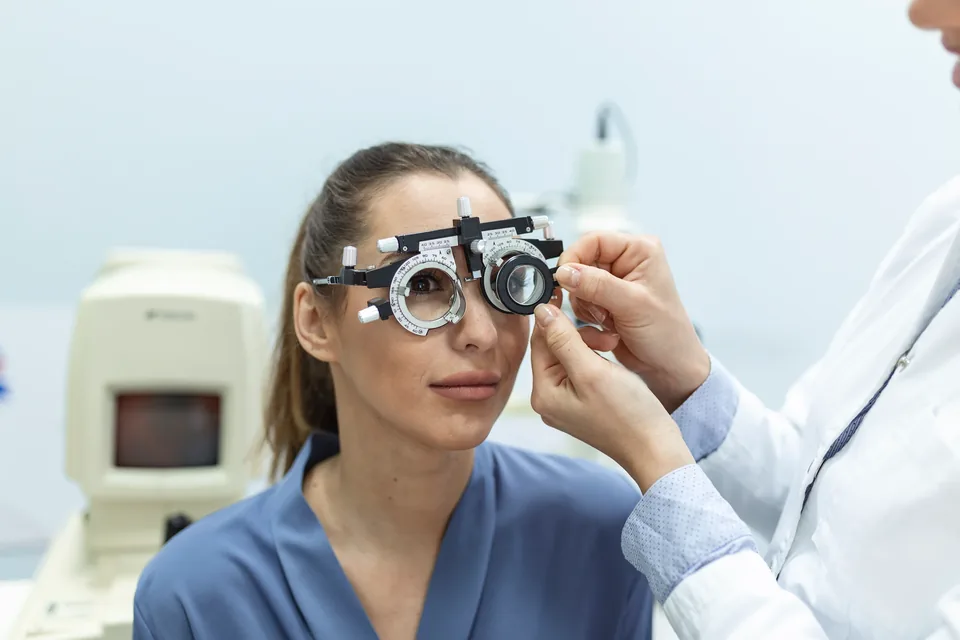
The test at this age, however, is not just about a prescription. Intraocular pressure is measured and the back of the eye examined, because glaucoma begins here without giving any sign of itself.
Over 60: cataracts, glaucoma and AMD
- Cataracts: the lens loses its transparency, vision becomes hazy, colours look faded and glare becomes uncomfortable, particularly when driving at night. Surgery with an intraocular lens implant is highly effective and is done when vision limits daily life.
- Glaucoma: damage to the optic nerve, often linked to raised pressure inside the eye. It starts with peripheral vision and is painless, so by the time you notice it, field of vision has already been lost and cannot be recovered. Caught early, it is controlled with eye drops.
- AMD: age-related macular degeneration affects central vision. The first signs are straight lines that look wavy or a blurred patch in the middle of the page when reading.
Living with diabetes? A retinal check every year
Diabetic retinopathy is one of the leading preventable causes of sight loss, and for years it produces no symptoms at all. For that reason, anyone with type 1 or type 2 diabetes should have the back of the eye examined annually, even with perfect vision. Good control of blood sugar and blood pressure, and stopping smoking, matter just as much as the eye check itself.
Symptoms that should not wait
Seek care the same day if you experience:
- Sudden loss of vision, complete or like a curtain coming down.
- A sudden shower of floaters together with flashes of light.
- Severe eye pain with a red eye, halos around lights, nausea or vomiting.
- Double vision that comes on abruptly.
- Straight lines that suddenly look distorted.
- Any injury or chemical splash to the eye.
Frequently asked questions
Is an eye examination covered by my health insurance?
With most policies, yes. We work with more than 40 insurers, all listed on our health insurance page. Some companies require prior authorisation, and our reception team will help you arrange it.
Will my pupils be dilated? Can I drive afterwards?
Examining the retina properly often means dilating the pupils. The effect lasts three to five hours and leaves near vision blurred and eyes very sensitive to light, so it is best to bring someone with you or a pair of sunglasses, and not to drive until it wears off.
At what age should a child have their first eye test?
If nothing is causing concern, between 3 and 4 years old, when children can cooperate with the test. If there is a squint, a family history or a history of prematurity, the first appointment is brought forward as much as needed.
Our ophthalmology page lists the tests we carry out at the centre. To book, call 972 30 65 65 or write to us through the contact form. You will find us at Plaça de Catalunya, 5 in Palafrugell, open Monday to Friday from 8 am to 8 pm and Saturday from 9 am to 2 pm.